






Chasing Light Into the Darkness, or Making it Ourselves Posted On 22nd April 2026 To Magazine & Stories

It’s been more than half a decade since I wrote about shooting ILFORD films in the winter when my solution to the pervasive grey, the grey clouds, grey streets, grey people, was to push film to its limits.
I regularly carried high speed emulsions: Delta 3200 which I would expose up to 12800, HP5+ up to 3200, all in an effort to cut through the reality that there was simply not enough light in the conditions I was trying to make images. The strategy was one of technical compensation, fighting the darkness by becoming more sensitive; but with no light to record, all the sensitivity in the world was not enough to deliver the imagery I felt I was seeking.
I’ve been reflecting on those articles lately, as we move out of another winter, and on the way the narrative-driven approach I have adopted since then has helped me reconcile the fact that those efforts were partially wasted on work that, even if perfectly rendered, would still say more about the dark than about the light. Vapid nothing, rather than life-and-story-filled something. Re-reading them feels like looking at the notes of a different photographer. The concerns are familiar, but the answers I’ve found have quietly changed.
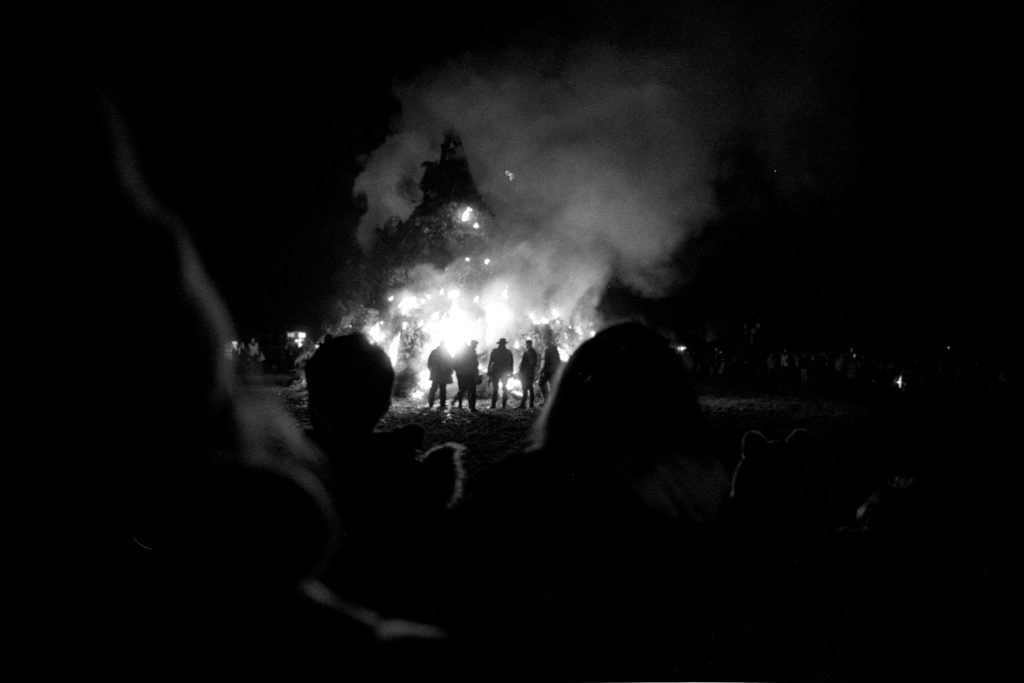
Delta-400-Chiddingfold-Bonfire-scaled.jpg
A natural shift
I used to see high ISO speeds as a necessary crutch. Now, I see that the real limitation wasn't the film, but my own approach. For the last few years, I haven't deliberately pushed a single roll of film, not because of a conscious vow or a challenge or anything like that, but a natural shift. I found that restricting myself to the baseline box speed, from 50 to 400, forced a consistency in my technique throughout the year, regardless of lighting conditions, weather, or environment.
The responsibility for the image settles firmly on my shoulders, not on the hope that a technical fix might intervene. It was a step in a fear driven process of recognising that the conditions I am working in, though worse than other seasons, are simply not as bad as the true extremes, it’s a poor excuse to say that the work can’t be done when so many sublime examples exist of people who work through the dark to reveal the light.
This shift demanded a new toolkit, built not around film stock, but around presence and technique. I still occasionally use Delta 3200, but exposed at 1000, not higher. This leaves it only a stop and a bit away from what I can achieve with HP5+ or the superb Delta 400, and harder to justify in my day-to-day bag. The high-contrast aesthetic I once sought through pushing development, I now find by seeking out pockets of light that naturally carve subjects from the shadows.
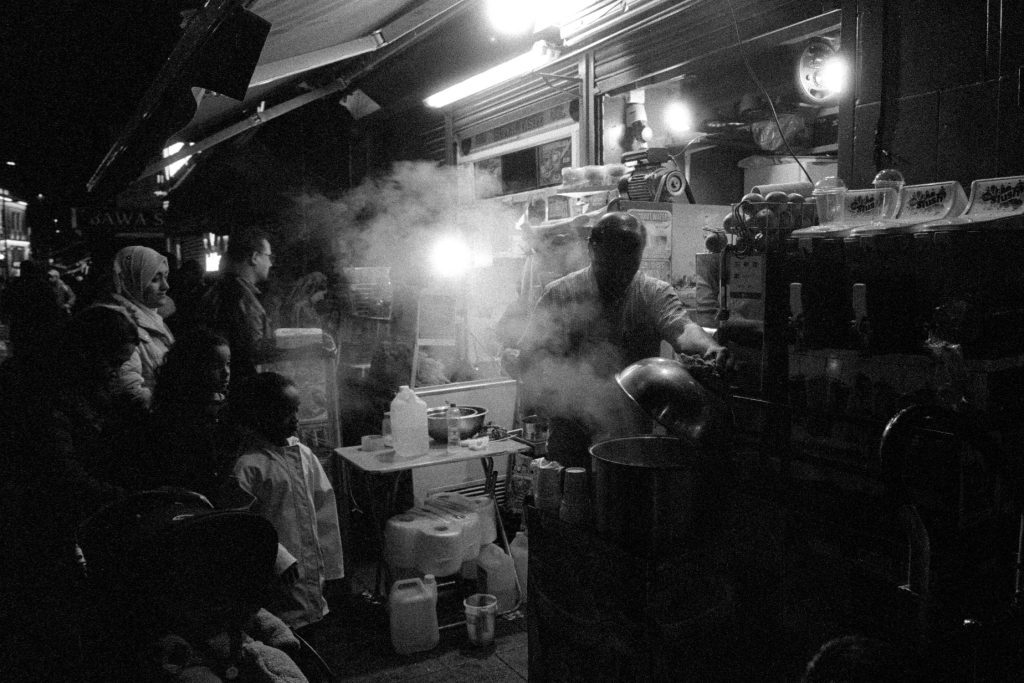
Delta-3200-at-1000-Green-Street-Eid
My relationship with flash
A significant change has been my relationship with flash. I used to fear it upsetting a mood, of being an interruption to ambiance and disrupting people around me, the equivalent of jumping out at them myself rather than with a quick burst of light. That fear turned out to be more about my own comfort in a space.
Overcoming that, and using an on-camera flash more frequently, has opened up worlds. At a local Hindu Temple during a celebration of Mahashivratri, I experimented with a very restrictive setup: a fixed-aperture 500mm f/8 mirror lens and a flash, its maximum power informing my distance calculation with HP5+ at 400. This locked me into a specific distance from my subjects, but instead of being a limitation, it became a guide, forcing me to find tightly framed details in faces during moments of prayer.
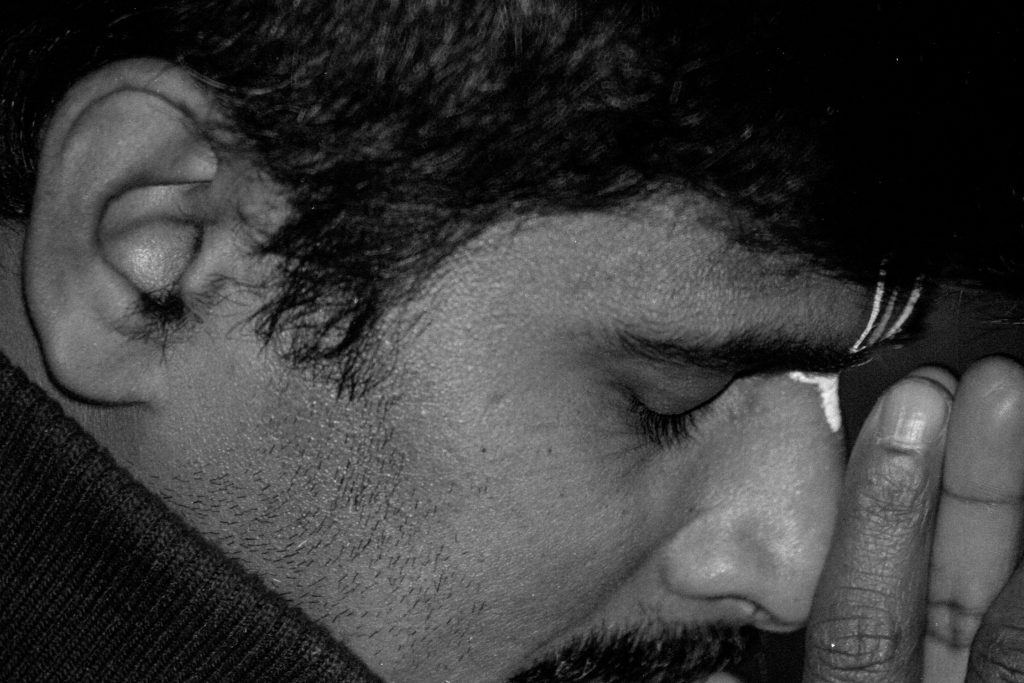
HP5-Mahashivratri-500mm
The flash wasn't an intrusion even in this intimate setting, never more than a couple of meters away from the people I was photographing; it was part of the process, and an obvious factor of my presence. People know what a camera does, and what a flash is for, it’s not as unexpected as I sometimes worry it may be perceived as. If I’m standing in front of you with a lens as prominent as the 500, and a large old flash on the hotshoe it isn’t the same as an unexpected flash from a speed camera, or on a busy street. I’m calm, in the same space as you, and about to make a photograph.
Much later in the year, Diwali and Bandi Chhor Divas tear open the sky (or slightly below it depending on how well they are aimed) with fireworks, and my flash goes totally unnoticed, a tiny spark lost easily in the chaos of celebration. As my local high street comes alive I can work very freely, moving through the crowds, making the images I need, and moving on without standing out as a result of emanating a relatively small amount of light from my flash, compared with the sparks flying around me.
-
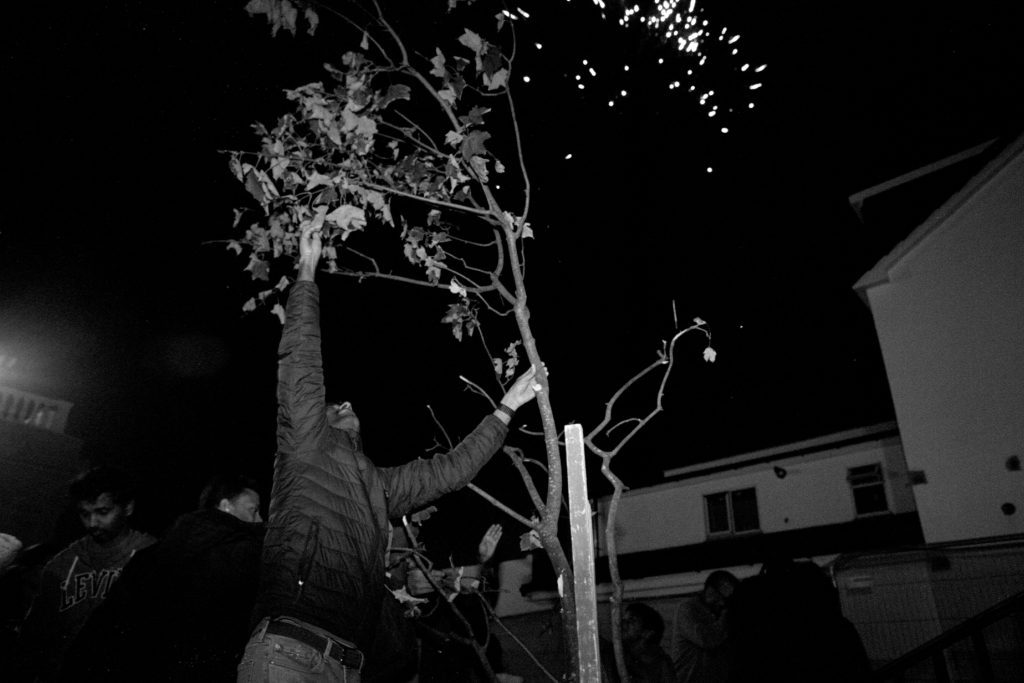
- Delta-400-Soora-Samharam
-
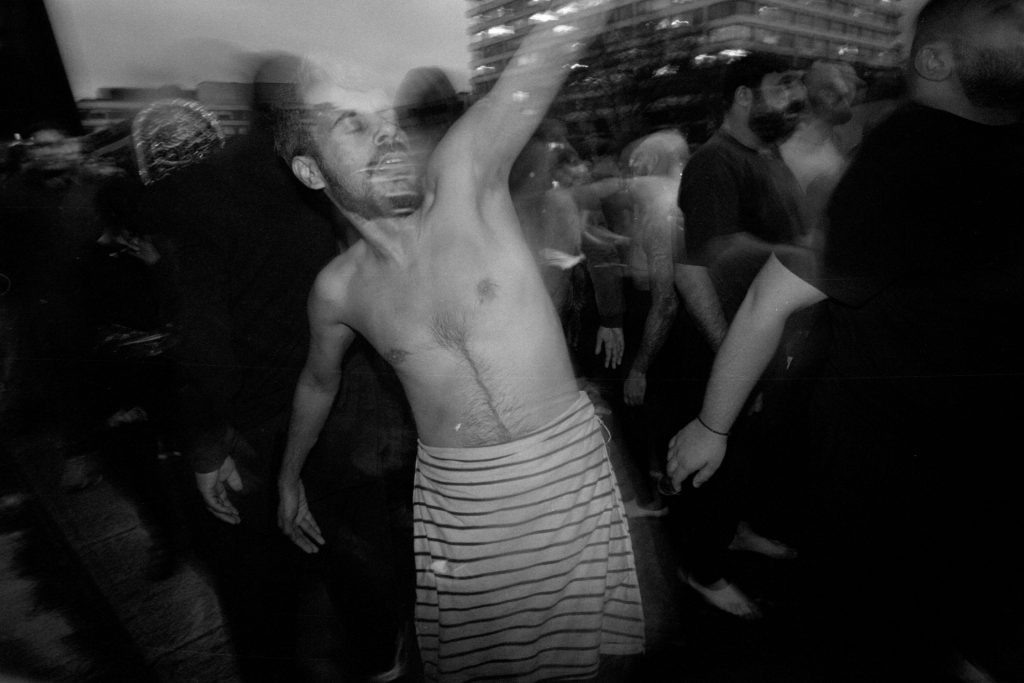
- Delta-400-Motam-on-Westminster-Bridge
Working with light
When flash isn't the answer, the challenge becomes working with the light that is already there, which recently has drawn my work indoors not only because of the lighting conditions but the precise nature of the stories I am working on. Homes, temples, shops, where people gather away from the dark, where the light is different and magnetic, drawing me in to utilise directly. This is the ultimate escape from the autumn grey I once lamented; not by fighting it, but by simply closing the door on it. The light here is not the soft diffused grey sky, but pinpoints from candles, light bulbs, or windows. More intimate, more deliberate.
During Bandi Chhor Divas, the rows of diya arranged around the Gurdwara cast a warm, flickering glow. It’s a light that requires immense patience. You wait for a moment of stillness, angle yourself just so to catch the way the flame hits a face, and often, you have to slow the shutter down, or even use it as bulb exposure rather than the mechanical timer.
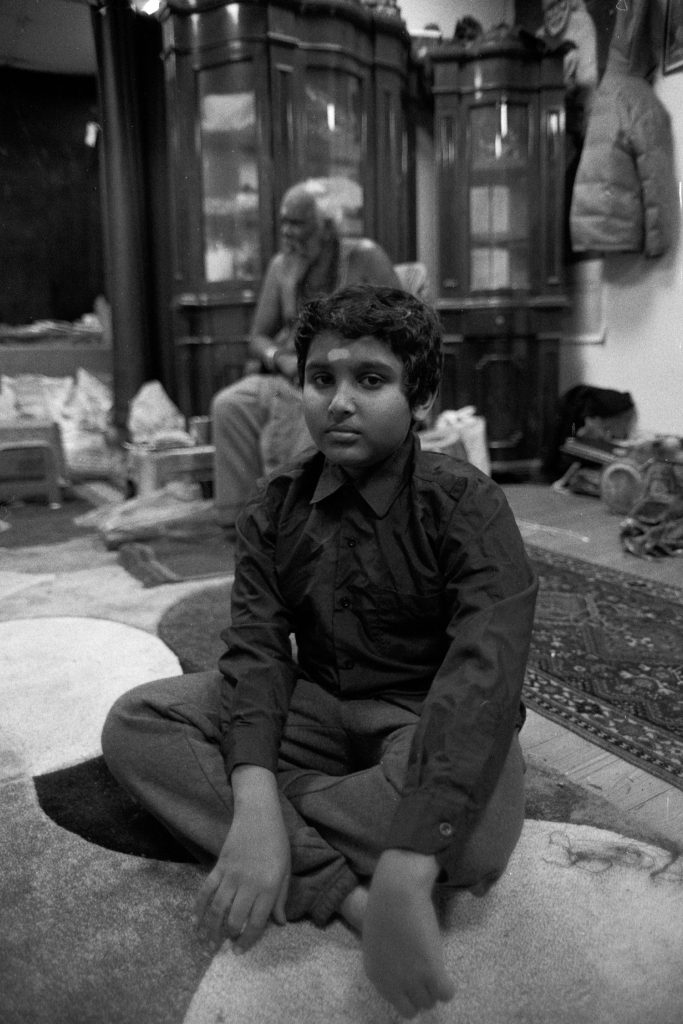
Kentmere-400-Ayyappan-Devotee-East-Ham
A record of life
This inevitably introduces blur, but that’s not always a failure. With a stable hold, usually aided by the smaller, quieter bodies of rangefinders, without a mirror to slap, or a deliberate pan, the blur becomes part of the story, a record of the life and motion in the space. It’s in these conditions that films like FP4+ and Delta 100, which I once worried over in fickle autumn weather, truly sing, their fine grain and tonal depth rendering these intimate scenes with a clarity that feels true to the moment.
A comfort in the interior worlds of my projects also means I don’t need to force myself to shoot in spaces just for the sake of it, such as the tired trudge of Oxford Street at Christmas which likely won’t feature in anything I’m working on at the moment. It's not just a seasonal avoidance, I’m simply more attuned to my local community, where the story isn't in the anonymous shuffle of commercial crowds, but in the specific, warm community spaces people gather to celebrate light as a ward against the heart of the dark season.
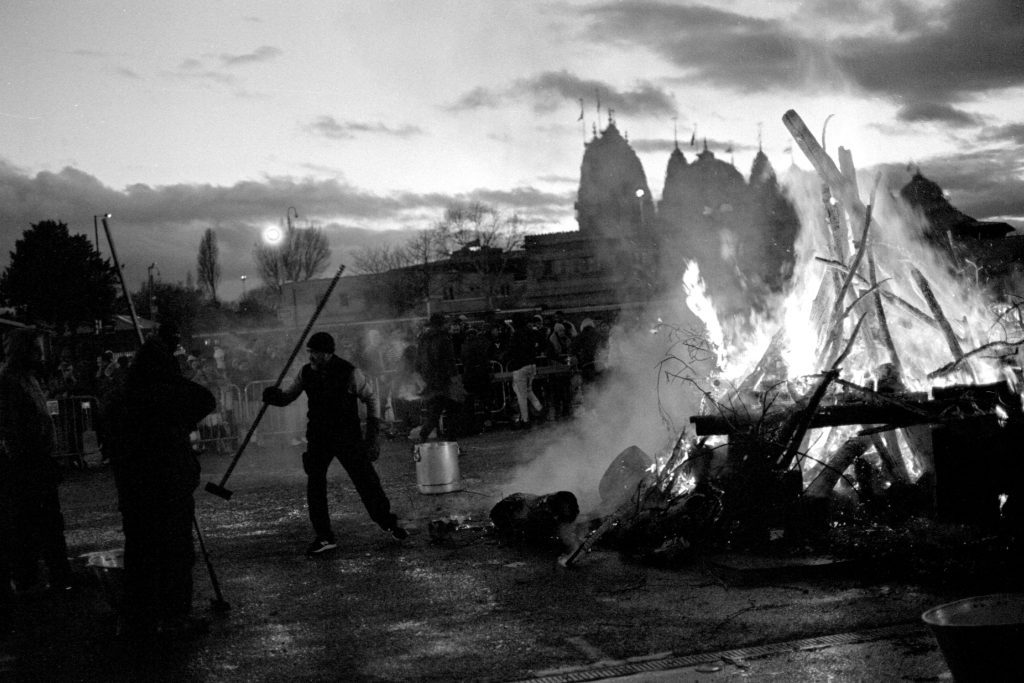
HP5-Holi-at-BAPS-Neasde
A choice of chemistry
Another change has been in my choice of chemistry. Up to a certain point this was exclusively Rodinal, a very classic developer. However, my reliable formulae were giving me results that, while enjoyable, were not quite up to the mark I was attempting, and I started incorporating Ilfotec HC, which is a more powerful and modern option.
This delivers fantastic sharpness and grain balance, boosting exposures a stop or two above Rodinal using a similar starting point. With Ilfotec HC I am using high dilutions based on personal experimentation, usually at 1+47, which means a longer development time, but delivering consistently clean and punchy results.
These high dilutions also take a little bit of the sting out of flash use. Which, when too close can often blow out detail in the highlights. I’ve found that Ilfotec HC with 1+47 and appropriate timings allows clear detail deep into the plane of a flash-fired image, even when close elements would otherwise be lost in a more conventional 1+31 method, almost like stand-developing without the standing.
-
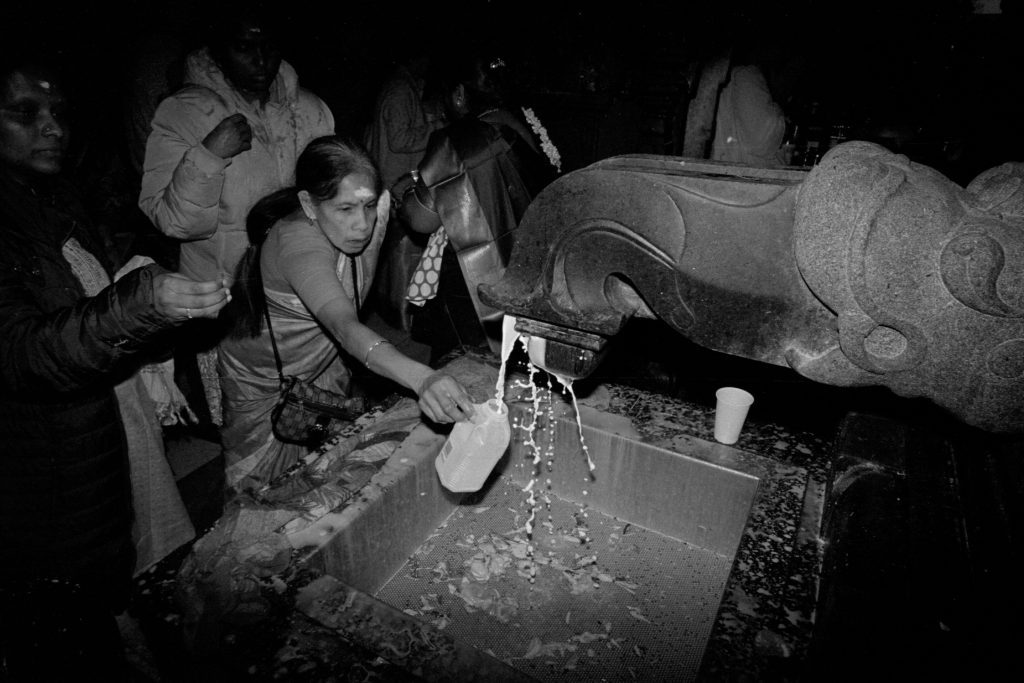
- HP5-Murugan-Temple-Manor-Park
-
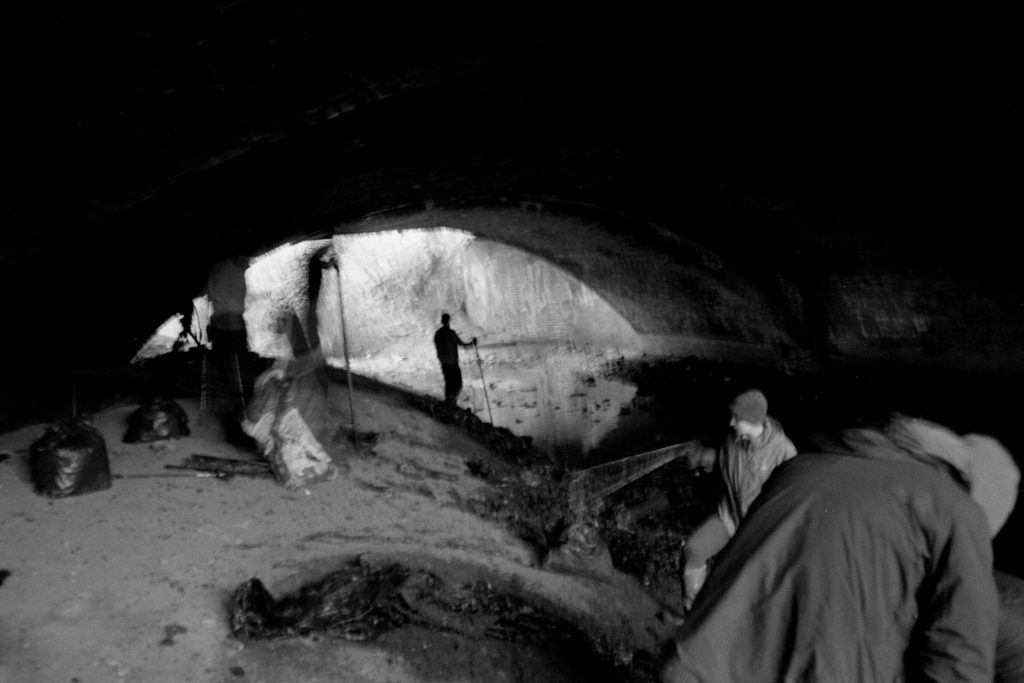
- HP5-Volunteer-Cleanup-Group-Aldersbrook
Letting Go
Letting go of a push-processing workflow has led me to some of my most satisfying results. A contributing moment of clarity was in 2022, documenting the foundation stone laying for the Milton Keynes Murugan Temple at dawn. The light was low, but I had committed to a roll of Pan F 50 and needed to work with that in my camera until I was able to switch to something else.
With a 90mm lens, I was shooting at shutter speeds down to 1/8th of a second. The resulting negatives were lovely. Sharp where it mattered, with a clarity and tonality that a pushed, grainy high-speed film could never have delivered. It was proof that the light had always been enough; I just hadn’t yet been enough for the light.
Winter and low-light photography in general isn't about enduring the lack of light. It's about recognising that the light has simply changed its address. It's moved from the sky to the diya, the firework, the candle, the window, the light bulb, and the flash. It’s found in the warm, human-made pockets we create against the cold. The chase is different now, not a battle against the grey but an acceptance and participation in the glow we make ourselves.
-
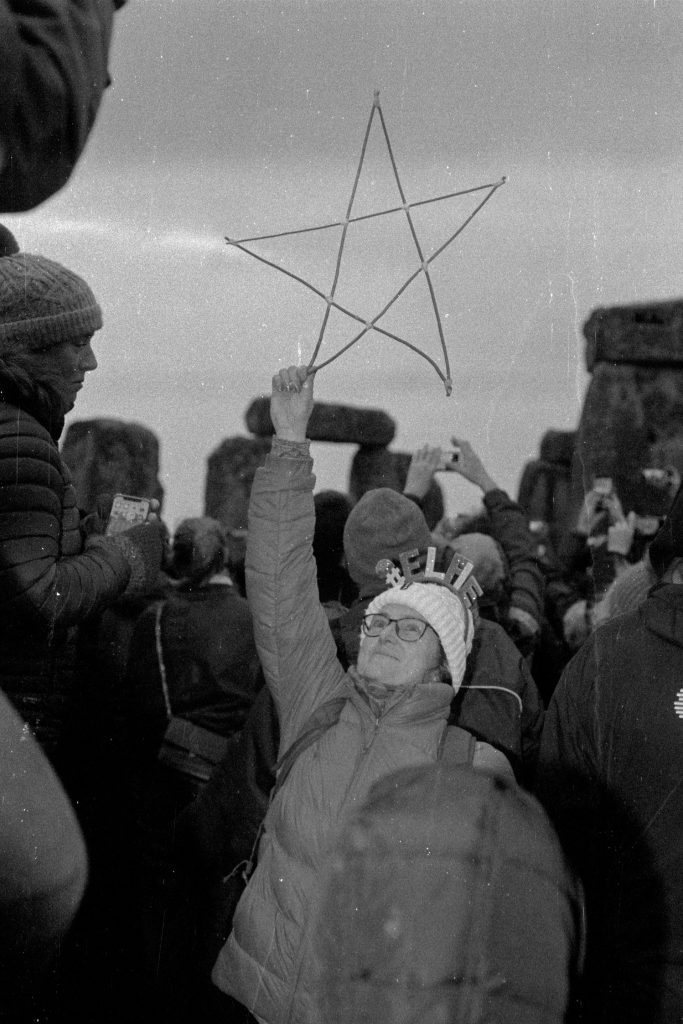
- Kentmere-400-Pentagram-at-Winter-Solstice-Stonehenge
-
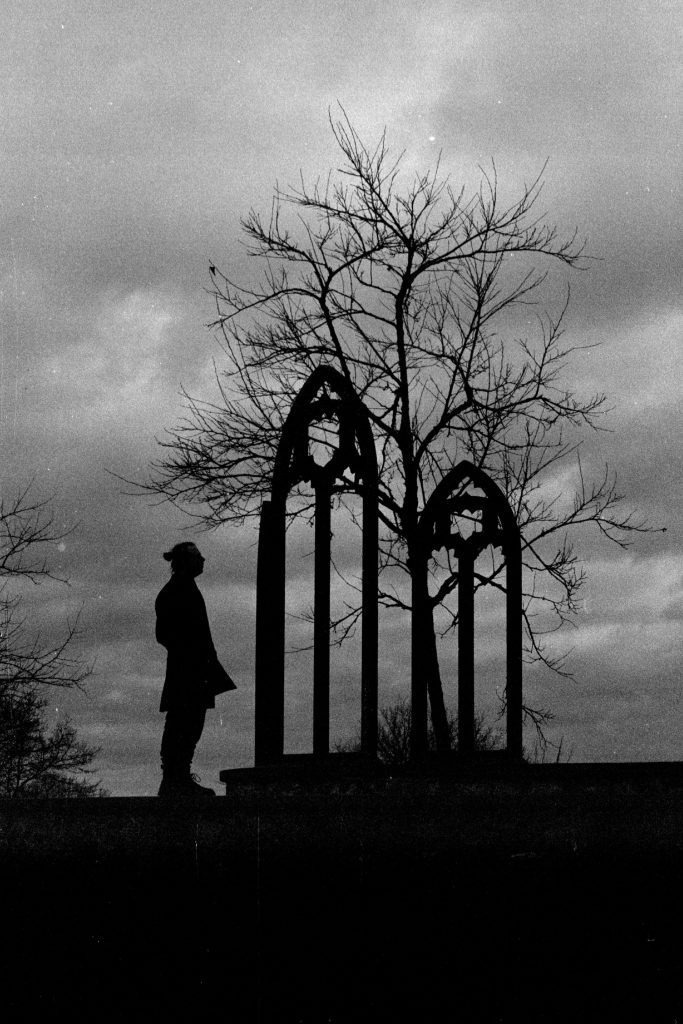
- Kentmere-400-Bas-in-Abbey-Wood
About The Author
Simon King
I used a photograph from the previous Solstice sunrise in the short video I made for the ILFORD #MyFilmStory series (https://www.youtube.com/watch?v=2PjDZU8h_VI), and yes, all of the photographers I was with made some kind of joke along those lines because I talk about not being a sunrise photographer as a poetic turn of phrase. You can find more of my photographs on my Instagram (www.instagram.com/simonking_v)