






Strangers in the Park Posted On 4th February 2026 To Magazine & Stories

How it all began
“So what’s your next project?”, my friend David asked me over lunch one day in the spring of 2024.
Unprepared for the question, my focus still on my second book, Fragments, which had just been published, my answer was quick and nochalant.
“I think I’m going to dig out my 4x5 and shoot some street portraits of total strangers”.
I surprised even myself with the answer. It was as if I was sitting in his chair and hearing that response for the first time. I can remember the conversation that I was having in my head as I uttered those words... “Really, you haven’t used that thing in ages, you probably don’t even remember how to use it! Who are you even going to get to pose for you!?”
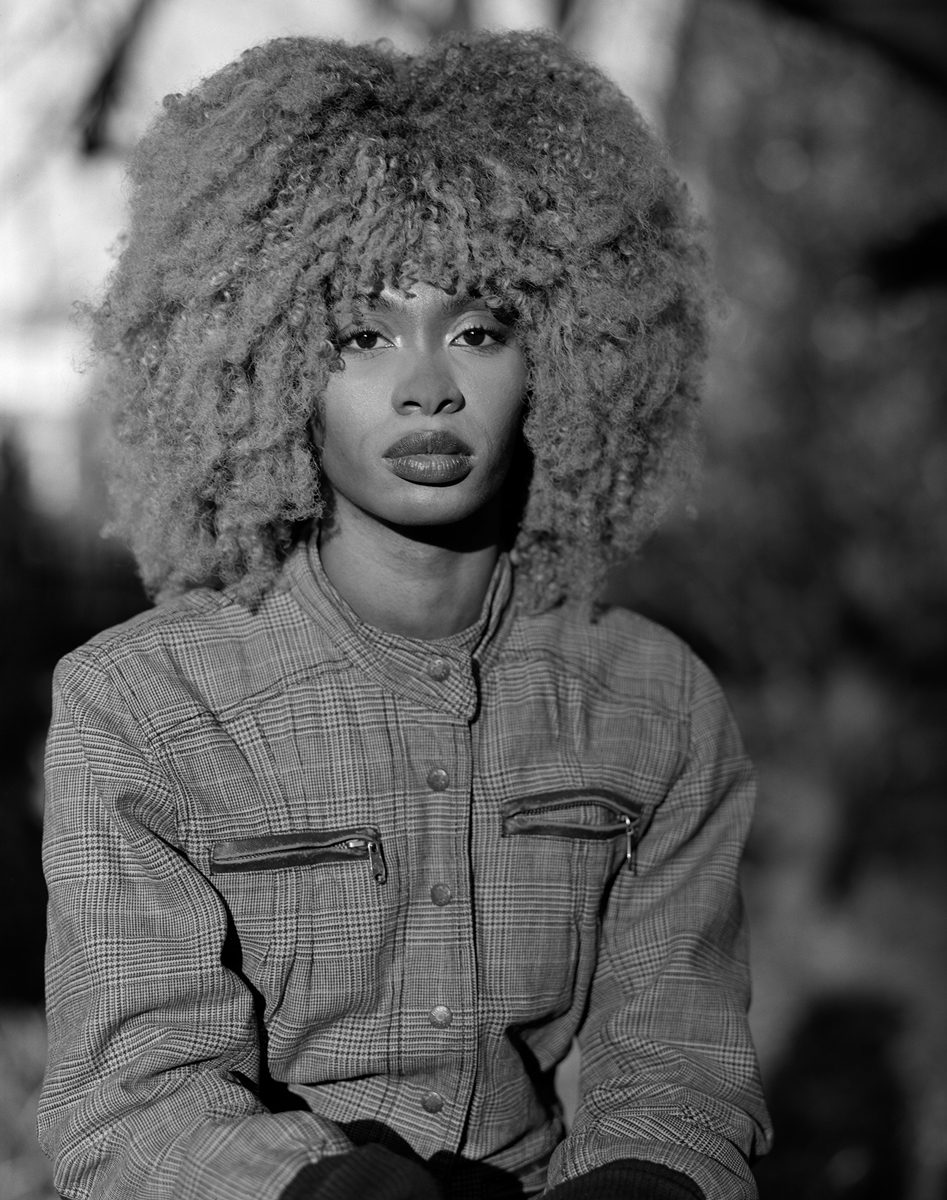
Kayla
With some tredpidation
With some trepidation I went home and dug out my cherrywood Wista 4x5 field camera, which I bought in 1985 and literally had not touched in over 30 years. It was carefully wrapped in the black duvetyn fabric that I used as the focusing cloth. My 90mm lens was also neatly wrapped, the film holders still loaded with Tri-Ex film from sometime in the 1990’s.
I folded open the camera and refamiliarized myself with its operation, chatted with some photographers and scoured the internet for film stock reviews, then shot some test film to make sure there were no light leaks. On a sunny morning in June 2024, with gear packed and 4x5 backs loaded with ILFORD FP4 Plus, I headed out to Union Square in New York City and went looking for compelling subjects.
I was a bit nervous, and the first few portraits I took were done hastily and poorly, my preoccupation with not screwing up the technical process completely overwhelming my sense of composition.
Tasad
But like riding a bike, my 4x5 legs started to come back, so towards the end of that morning, when I encountered Tasad, I was ready for him as much as he was ready for me.
“Yo”, he called out to me, “take my picture!”. I was instantly drawn to Tasad - he had a face that exuded charm and a riveting and magnetic (possibly chemically enhanced!) personality. We immediately hit it off and I knew that I had struck gold.
I came home that day in a mood of euphoria, completely reenergized by my interactions that morning, and so the project that I now call Strangers in the Park was born.
Strangers is a series of black and white portraits of total strangers, predominantly taken in Washington Square Park in New York City, but also in the UK (Piccadilly Gardens in Manchester and Camden Town in London). The project has been a wonderful revelation for me, not only rediscovering the simplistic beauty of large-format portraiture but also providing me the opportunity to meet and get to know all kinds of people that I would normally never encounter.
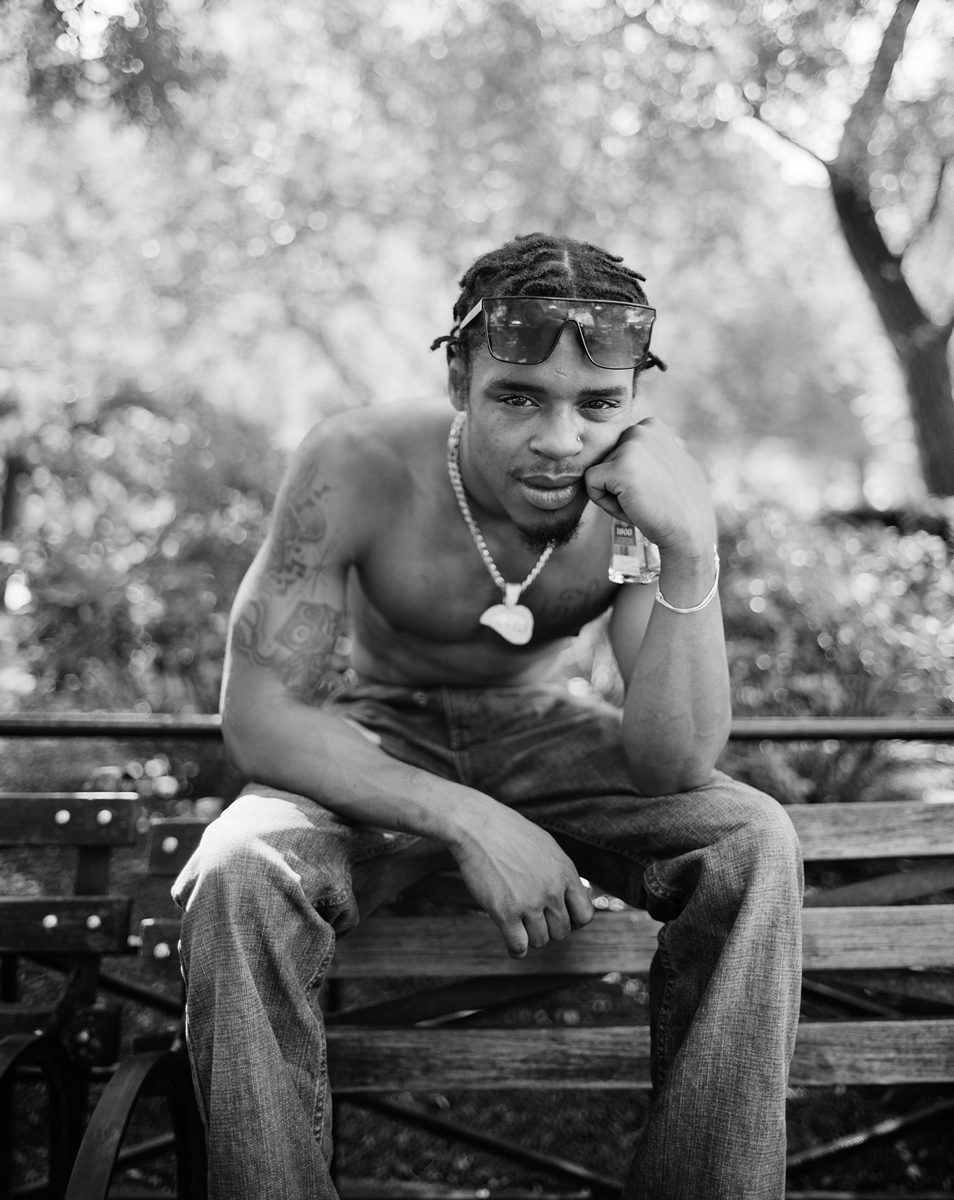
Tasad
Background
While in my career I have shot plenty of digital images, film, particularly black and white film, has always been the medium that I felt best expressed my vision. When doing personal work, I exclusively used the 6x7 Mamiya 7, which gave me the exquisite quality of medium format film along with the ability to easily hand-hold and frame on the fly. The 65mm lens was sharp and had very little distortion at the edges of the frame.
Though I was working in beauty and fashion, documentary photography had always been my passion and between 2001 and 2018 I took many trips off the grid in southeast Asia and China, documenting ethnic minorities and hill tribes. Along with the images, I compiled a fair amount of travelogs, marrying travel writing with descriptive text about these unique and quickly disappearing cultures. During the enforced “time-out” of the pandemic I had the great fortune to work with Elizabeth Avedon to assemble that work into a monograph, Off the Beaten Path, published in 2023.
Having enjoyed the project of putting a book together so much, I spent 2023 creating my second book, Fragments, a series of images focused on light and texture, paired with poetry written by my late mother, Eliane Reinhold. Quite different from my documentary work, Fragments was a book of images of distressed metal, crumbling brick, piercing sunlight and dark shadows.
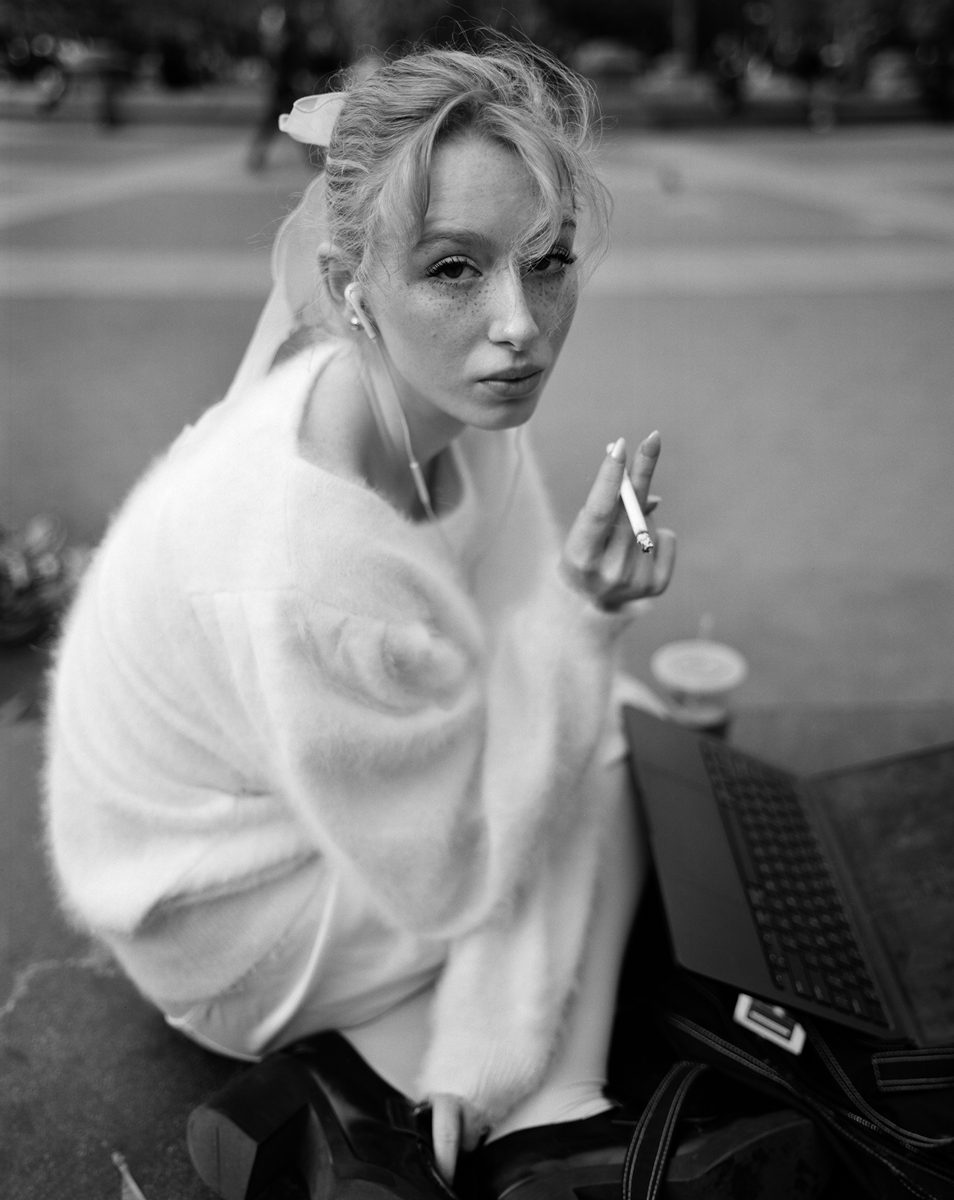
Taylor
Why 4x5
The Wista had sat in my closet for decades, but it seemed to be in pristine condition, exactly as I had left it some 30-years prior. As we became reacquainted, I realized that I was falling in love again. But what to do with it? With no immediate ideas, I decided to simply go out and photograph people on the street and see if I liked the results.
After a bumpy first morning, I quickly hit my stride and then realized that there were two wonderful and unanticipated advantages to using this camera. First, my subjects, like me, were seduced by my camera. Almost no one said no when I approached them. Second, the process to take a large format portrait is not fast, usually at least 5 minutes, but sometimes longer. During that time, my subjects and I got to know each other, sometimes in quite meaningful ways. Whether or not I had taken an interesting image, in many instances I had made connections on a level that I simply could not do with my Mamiya, as the encounter would have been over within a matter of seconds.
After each session of shooting large format portraits, I feel richer for the experience, my balance in the bank of humanity ever increasing.
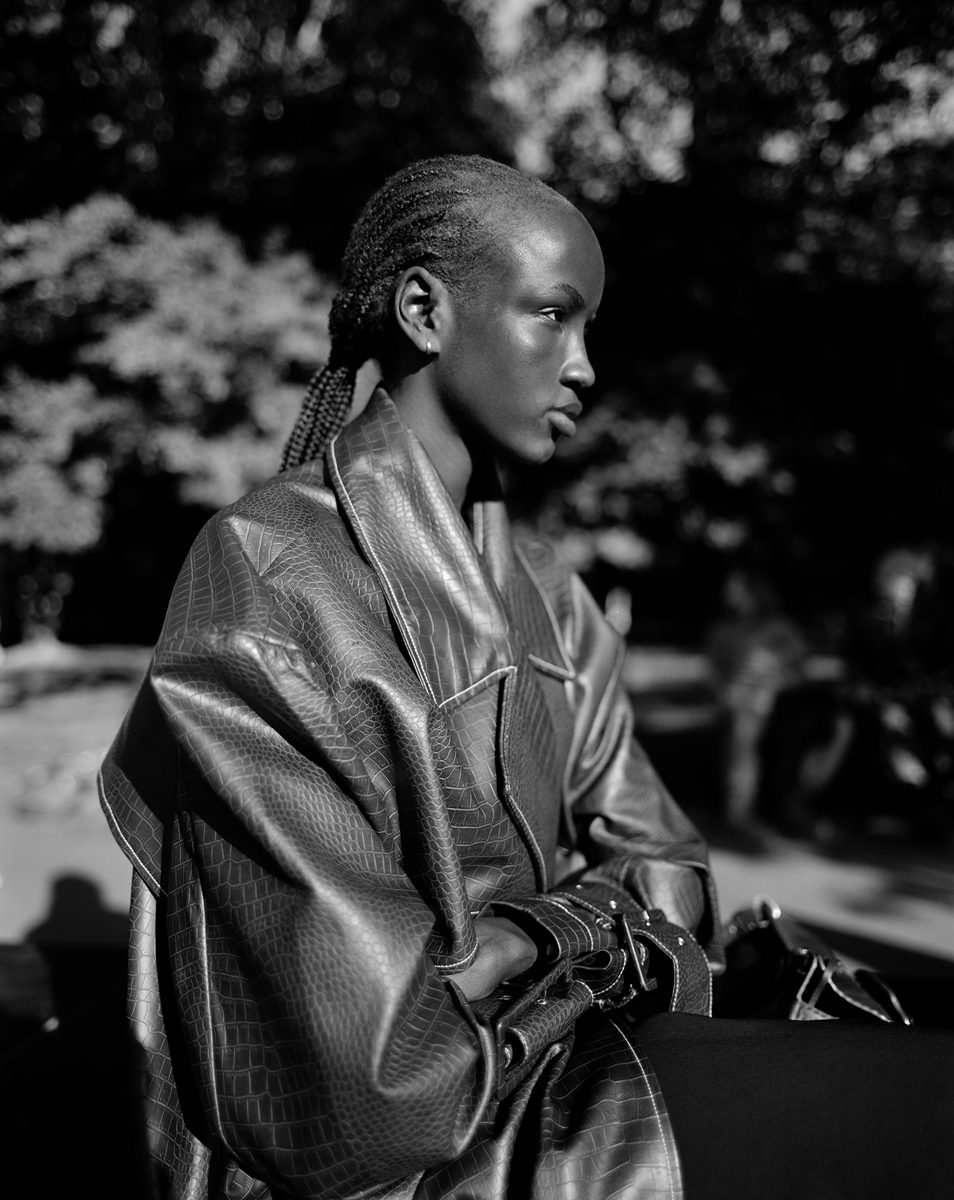
Mayor
Technical Process
When I was shooting 4x5 thirty years ago, I developed my own film but for various reasons, space among them, I decided to process my film at a local lab. I’d already been scanning my negatives on a Hasselblad Imacon scanner for over 15 years, and so the printing was done at home on my Epson large format printer.
Using FP4 Plus resulted in another unexpected and happy surprise. When comparing results, my negatives from the 1990’s were no match for the superior tonality and creamy grain structure of FP4 Plus. I could not have been happier with the film stock.
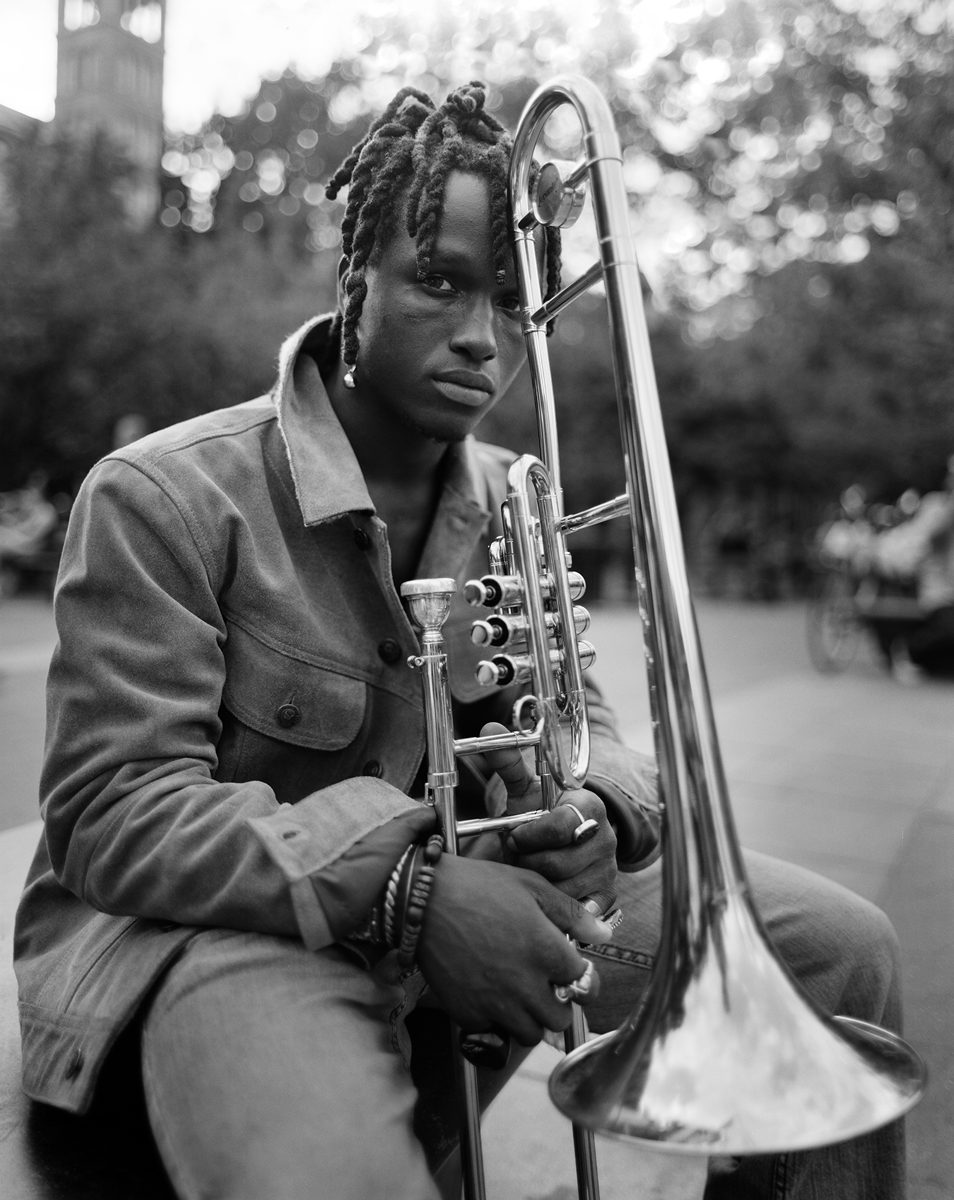
Maurice
Photographic Process
One of the most common questions I get asked when showing my work is how do I choose my subjects? It’s a hard question to answer, and there are a few limiting parameters. Because I’m always shooting wide open (f4.5 on my 90mm and f5.6 on my 210mm), they must be seated or simply not on the move. If I’m drawn to someone that appears to be occupied with other matters where I might be intruding, I will go elsewhere but make efforts to return shortly to that location in hope of finding them more available. Basically, wherever I happen to be photographing, I simply walk the area over and over again, looking for people that meet these preconditions and, of course, that I think have visually interesting aspects, be they facial features, manner of build, clothing, body ink, accessories, etc.
Thankfully gone are the days of shooting Polaroids to confirm framing. I use an app on my phone called Viewfinder which perfectly mimics my lenses, making the decisions about camera placement, angle and height quite fast. After discussing positioning and mood, I look at my subject almost as a spectator - the decisive moment comes, I press the shutter, and then I wait for the magic.
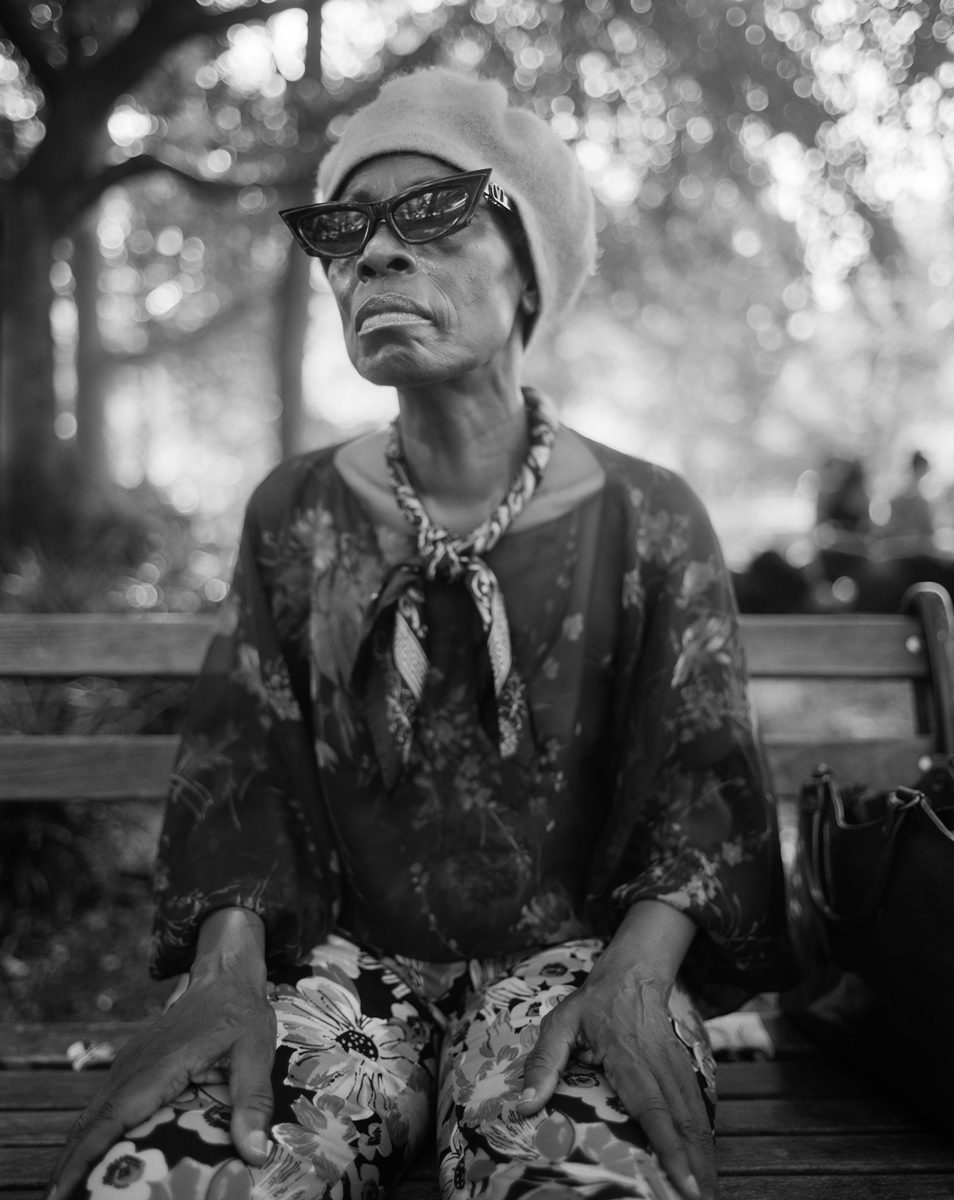
Harmony
A different experience
It’s a very different experience when shooting portraits with a large format camera versus any traditional camera where you are looking through a view finder as you take the picture. With the latter, even without the aid of a preview screen on a digital SLR, you tend to have a good idea of how photogenic your subject is, and you will likely shoot quite a few pictures, “covering” the moment.
Large format does not offer that convenience - there are only so many backs that I can carry, reloading on location in a cramped tent is not ideal, the film and processing costs add up - so the process is much more formal and deliberate. And not just on my end of the camera. The person being photographed interacts in a profoundly different way to a large format camera, allowing me to gain a more unique perspective and, in my opinion, allowing us to achieve a more intimate and collaborative experience.
I’m having a fabulous time shooting these portraits and I intend to continue this project in other cities around the world, very likely turning these images into my next book. I have already had two exhibitions of Strangers in NYC - it’s quite a special and gratifying experience when my subjects come inside the gallery and see themselves hanging on the walls.
-
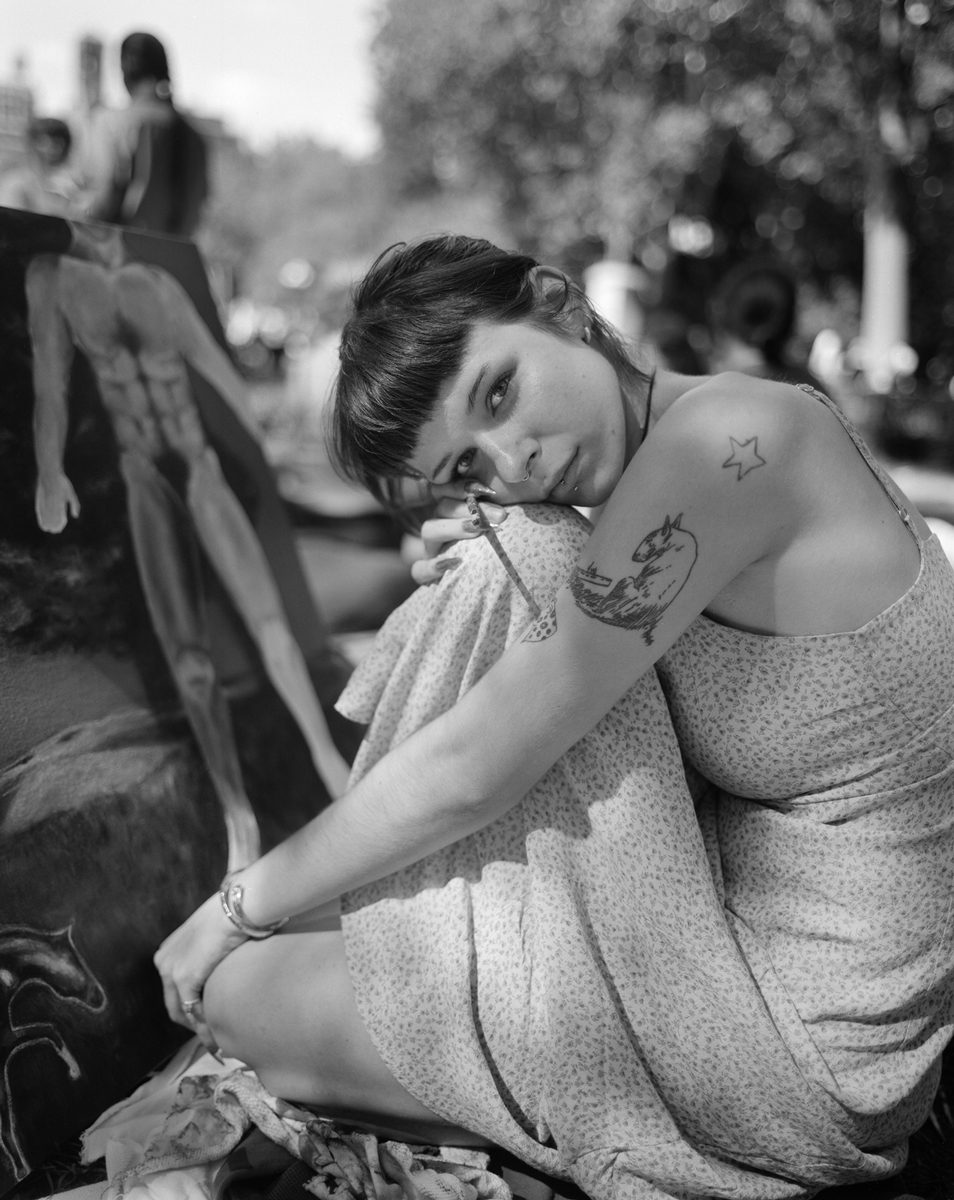
- Ellina
-
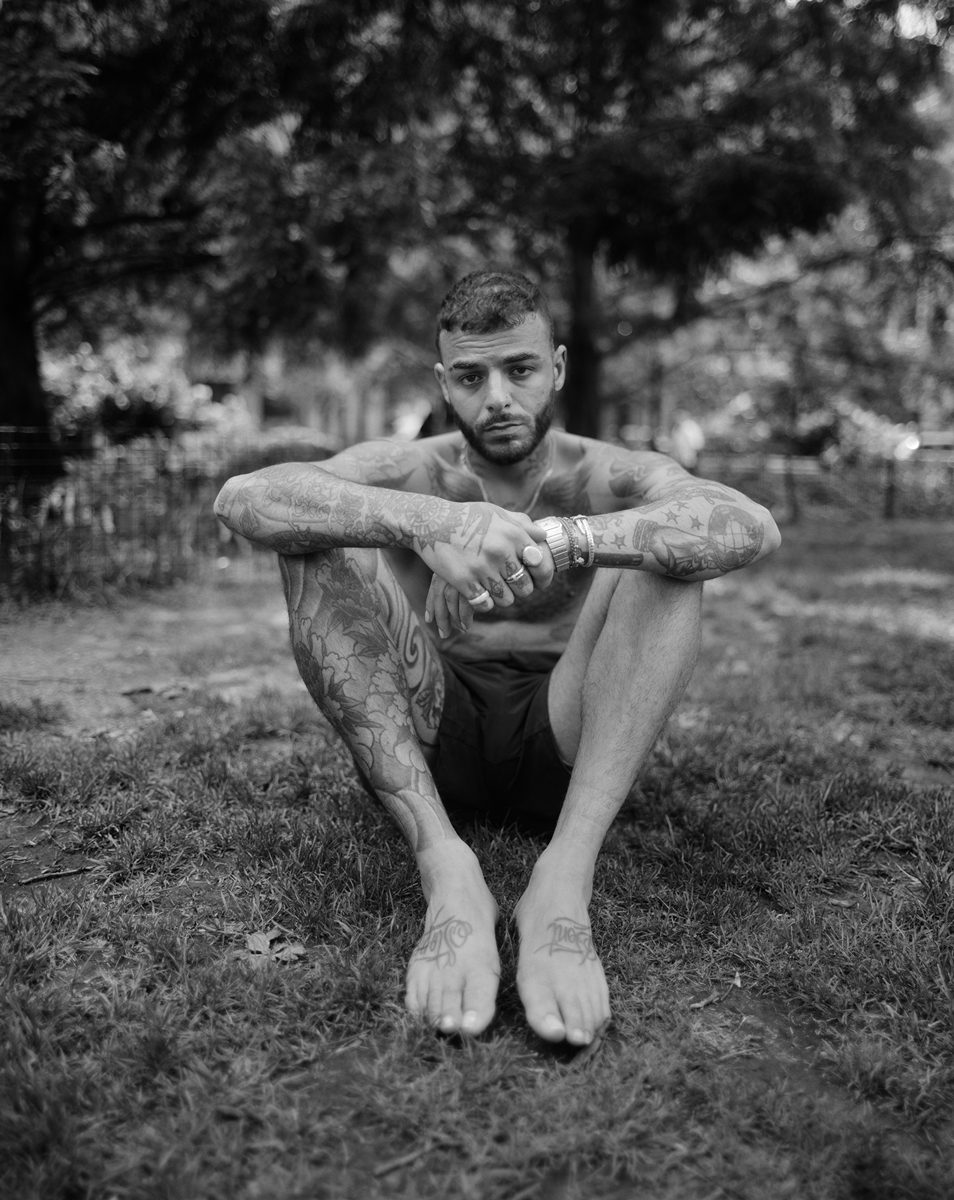
- Arvin
About The Author
Michael Schenker
Michael Schenker is a New York-based photographer and travel writer specializing in large format and environmental portraiture. He is currently shooting Strangers in the Park, a series of large format, black and white portraits of total strangers.
nSchenker spent many years documenting ethnic minorities throughout SE Asia and China and has regularly exhibited his work with solo shows at Hong Kong’s Fringe Club and multiple shows at Soho Photo Gallery in NYC.
nSchenkeru2019s first book, Off the Beaten Path, was published in 2023, while his second book, Fragments, was published in 2024.
nLinks:
nnnnn
n